WORKFORCE FINANCE
Fixa
•
7 min read

By 2050, Africa will have the world’s largest workforce, and most of it will be informal. Here’s what that means for construction employers and frontline workers today.
The Number That Should Change How Every Employer Thinks About Payroll
By 2050, Africa will have the largest workforce in the world [1]. That is not a distant forecast to file away. The workers entering that workforce are already here, already on construction sites, already mixing concrete and laying foundations across Kigali, Nairobi, Lagos, and Accra.
The question is whether the systems managing them are keeping pace.
Right now, they are not. Research by the International Labour Organization estimates that informal employment accounts for more than 85 percent of employment in Africa [2]. No payslips. No employment contracts. Often no bank accounts. Wages are handed over in cash at the end of a week, or whenever the site manager gets around to it. This is the norm for much of the blue-collar workforce that builds Africa’s cities.

What "informal" actually means
“Informal” is a tidy word for something that is genuinely hard on workers.
It means a laborer who worked six days this week has no way to prove it. It means a site manager reconciling 40 workers across three locations is doing it with a notebook and a phone. It means a worker whose rent is due Thursday has no way to access wages earned before Friday’s cash run.
It also means employers carry more risk than they realize. Cash payroll is hard to audit, easy to dispute, and leaves no record when something goes wrong.
The informal construction sector is where these pressures are most visible. Construction is project-based, seasonal, and draws workers from wide catchment areas. Turnover is high. Record-keeping is inconsistent. When a project runs over schedule or a payment from a client is delayed, workers are the first to feel it, and the employer is often the last to know there is a retention problem.
Why This Matters More at Scale
Africa’s workforce is not just growing. It is urbanizing fast. UN population projections show that sub-Saharan Africa’s urban population will more than double by 2050 [3]. That growth is directly tied to demand for housing, roads, commercial space, and public infrastructure, making construction one of the sectors under the most pressure to manage workers at scale [4].
That growth puts pressure on workforce management in ways that paper-based systems cannot absorb. A site manager overseeing 20 workers can, with effort, track attendance and wages manually. At 80 workers across two sites, that same approach starts producing errors, disputes, and unpaid hours that nobody can verify after the fact.
Digital payroll infrastructure is not a luxury at that scale. It is the only way to keep accurate records, pay people correctly, and give workers something they can actually use: a transaction history, a payslip, and access to their earned wages before the end of a pay cycle.

The Opportunity Inside the Problem
Here is what is easy to miss in a conversation about informality. These workers are not outside the economy. They are building it, literally. Across Africa, informal employment represents a dominant share of work, and construction depends heavily on casual, temporary, and project-based labor [2][4].
What they lack is not work. It is infrastructure around the work.
That is the gap that HR-fintech for Africa is positioned to close. Not by turning informal workers into formal employees overnight, which is a policy question and a long one, but by giving employers the tools to pay accurately, document work, and extend basic financial services to workers who currently have none.
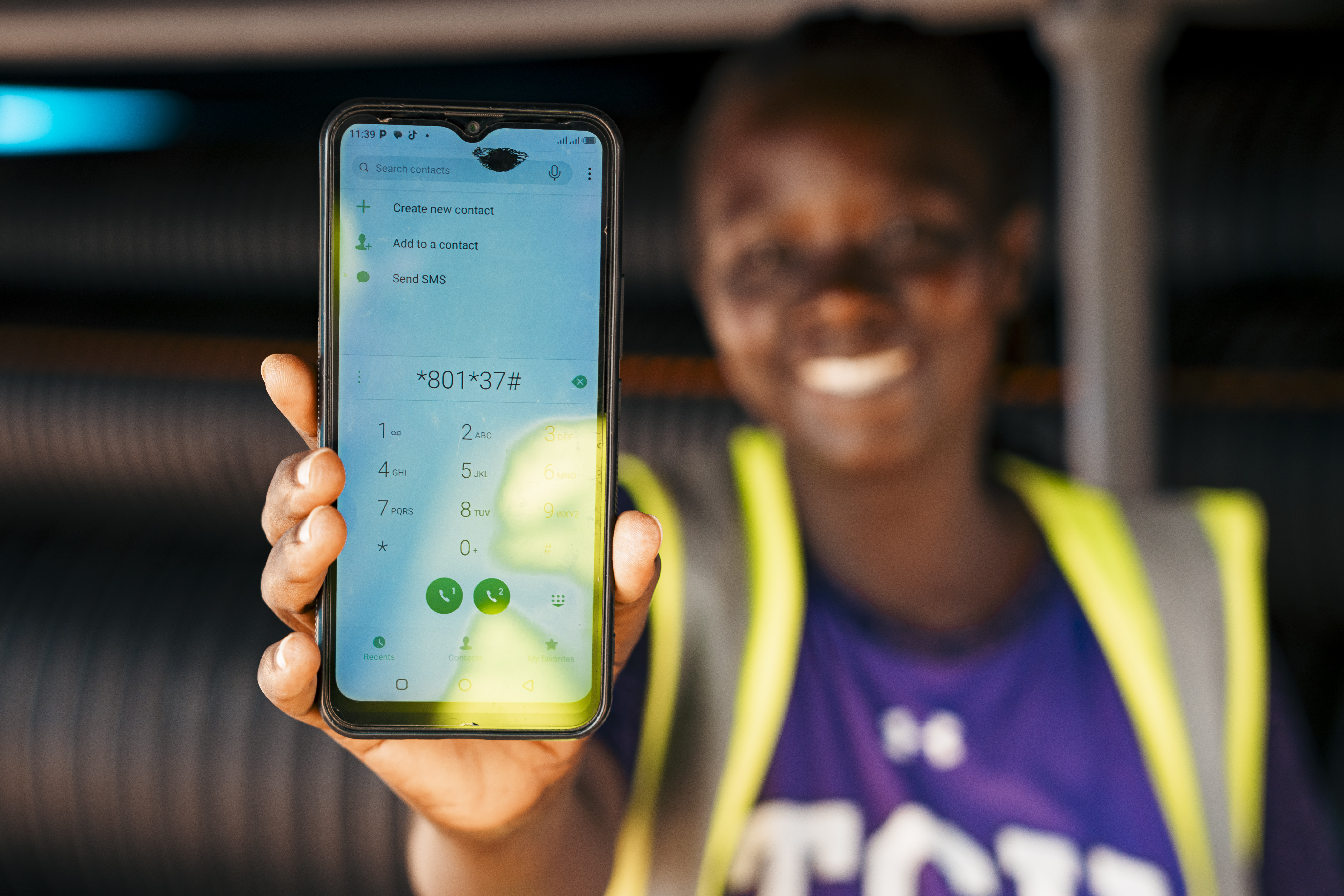
Digital wages are one concrete piece of that. When a worker receives pay through a mobile money account rather than a cash envelope, something small but significant happens. There is a record. There is a balance they can check. There is a foundation on which financial wellness at work becomes possible rather than theoretical. GSMA’s mobile money research shows that sub-Saharan Africa remains the world’s largest mobile money region, with hundreds of millions of registered accounts and hundreds of billions of dollars in annual transaction value [5].
What Fixa Is Built For
Fixa is built specifically for Africa’s frontline workers and the employers who manage them. The platform is designed around the realities of the informal construction sector: variable schedules, mixed literacy levels, mobile-first access, and the kind of payroll complexity that comes with managing large casual workforces across multiple sites.
The goal is not to paper over informality with technology. It is to give site managers accurate tools and give workers something they have largely never had: visibility into what they have earned and access to it when they need it.
By 2050, Africa’s workforce will be the largest in the world. Most of those workers will still be in the informal economy unless the infrastructure around them changes. Building that infrastructure is not a 2050 project. It starts with how employers pay their workers this week.
Sources
World Economic Forum — analysis on Africa’s demographic dividend and the continent’s rapidly growing working-age population.
International Labour Organization — Women and Men in the Informal Economy: A Statistical Picture, 3rd edition; informal employment is estimated at more than 85 percent of employment in Africa.
United Nations, World Urbanization Prospects — projections showing major urban population growth across sub-Saharan Africa through 2050.
International Labour Organization and construction-sector research — context on project-based construction work, temporary employment, and informal labor arrangements.
GSMA, State of the Industry Report on Mobile Money — research documenting sub-Saharan Africa’s leading role in mobile money accounts and transaction value.